Play Based Learning Supports Child Development What Parents Should Know
Best Preschool
Play Based Learning Supports Child Development What Parents Should Know
Best Preschool , Oct-23-2026
How Does Play-Based Learning Support Child Development?
Play-based learning supports child development by letting children learn through exploring, pretending, building, and talking. It builds language, thinking, movement, creativity, and social skills together, which is why it suits the early years better than worksheet-heavy teaching.
What Is Play Based Learning?
Play-based learning is an approach where children learn through activities they enjoy, guided by teachers who set up the environment and ask the right questions. It is not just free time. The teacher plans the materials and activities so that play leads to learning.
How Play Based Learning Supports Child Development
Thinking and problem solving. Building with blocks or solving a puzzle teaches children about size, shape, balance, and cause and effect, which later supports early maths and science.
Language. Pretend play, such as running a shop or cooking, encourages children to talk, ask questions, and tell stories.
Physical skills. Climbing, running, and jumping build large muscle control. Threading beads, drawing, and pouring build the finger strength needed for writing.
Social and emotional skills. Playing with others teaches children to take turns, share, handle disagreement, and understand feelings.
Creativity. Art, music, and open-ended play let children try ideas without worrying about right and wrong answers.
The Teacher’s Role
In a good play-based classroom, the teacher is active. She watches, joins in, and asks questions like “What do you think will happen?” This turns a simple activity into a learning moment. Without that guidance, play may be fun but may not extend a child’s learning.
Does Play Based Learning Prepare Children for School?
Yes. The skills children need for formal school, such as listening, focusing, speaking in sentences, and holding a pencil, grow naturally through play. Children who learn this way usually reach reading and writing with more confidence, because the base is already in place.
How to Tell If a School Is Truly Play Based
Visit the classroom and look for:
Open shelves with blocks, art materials, and books children can reach
Children moving between activities, not sitting for long periods
Teachers talking with children, not only giving instructions
Displays of children’s own work, not identical copies
Little emphasis on rote repetition or heavy homework
Ask the school how it introduces letters and numbers. A good answer will mention songs, stories, and activities, not only worksheets.
Play Based Learning at Thames Valley Preschool
Thames Valley Preschool describes its approach as a blend of Montessori, STEM, and experiential learning, supported by smartboard lessons and an Innovation Lab where children can explore hands-on. Its website also lists small class sizes with individual attention and regular teacher training.
To see how the ideas translate into daily classroom activity, read the learning approach and preschool curriculum pages, then visit a centre through our centers.
(Asked Frequently Question) FAQ’s
Q1. Is play-based learning enough to get my child ready for school?
Ans: Yes, when it is well planned. It builds the language, focus, and motor skills children need for formal learning.
Q2. When should my child start reading and writing?
Ans: Gradually, in the later preschool years. Early years focus on pre-reading and pre-writing skills.
Q3. What is the difference between play and learning?
Ans: For young children, they are closely connected. Play is how they explore ideas and practice skills.
Q4. How can I support play-based learning at home?
Ans: Offer blocks, art supplies, books, and simple pretend play. Talk with your child as they play.
Q5. Will my child fall behind if the school does not use worksheets?
Ans : Not if the school builds skills through activities. Ask how progress is tracked.
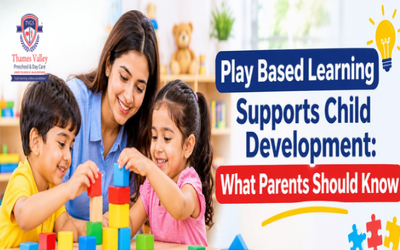
Discover how play based learning supports child development by building creativity, social skills, problem-solving abilities, and confidence in young children.
Popular
- Play Based Learning Supports Child Development
- Play Based Preschool Curriculum
- Play Based Learning Activities For Kids
- Benefits Of Play In Early Childhood Education
Shopeze.in
Shopeze.in
Aaja.in
Boost via Reels & Images
Learn Python
Learn Python By Gagan Khanna
Quick...
Professional Help for Growth
Tags
Play Based Learning Supports Child Development Play Based Preschool Curriculum Play Based Learning Activities For Kids Benefits Of Play In Early Childhood Education